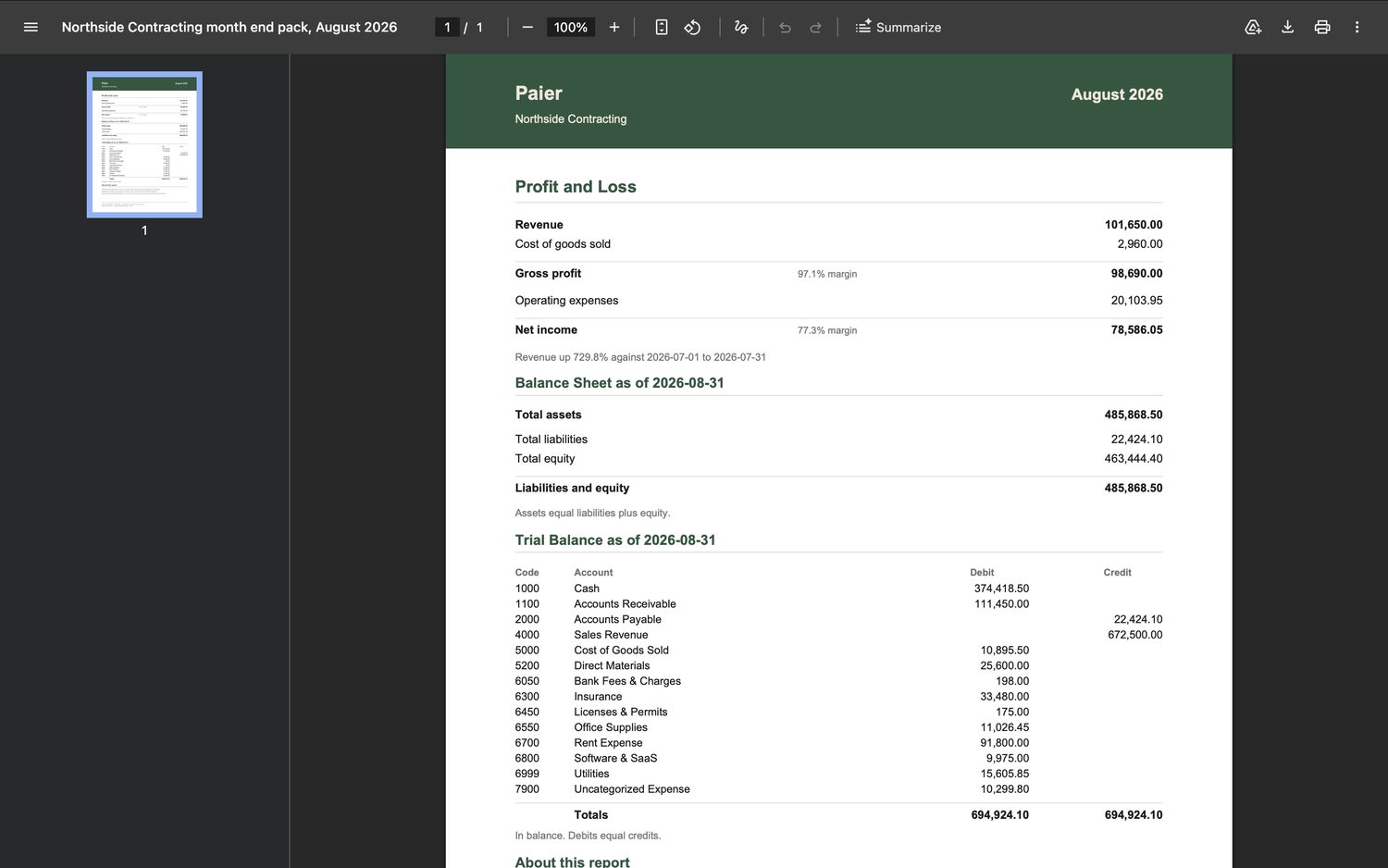
What happened, what is happening, and what is coming.
A bookkeeper closes last month. A controller runs this week. A CFO is looking two quarters out. That is usually three tools and three exports. Here it is one posted ledger answering three questions.
Past
What happened
Bob reads the inbox and the bank, codes every invoice and receipt as it lands, and matches it to the bill already on file. Clean up stops being a monthly excavation.
Instead of a receipt chasing tool and a categorisation backlog.
Present
What is happening
Bills, approvals, payroll and collections in one queue, with the client, their team and their vendors in the same threads. Every entry waits for a human before it posts.
Instead of a bill pay tool, a payroll tab and a folder of email threads.
Future
What is coming
Thirteen weeks of cash off the same books, updated as money moves, so the forecast you show a client on Friday is still true on Monday.
Instead of a forecast spreadsheet that is stale the day you build it.
What happened
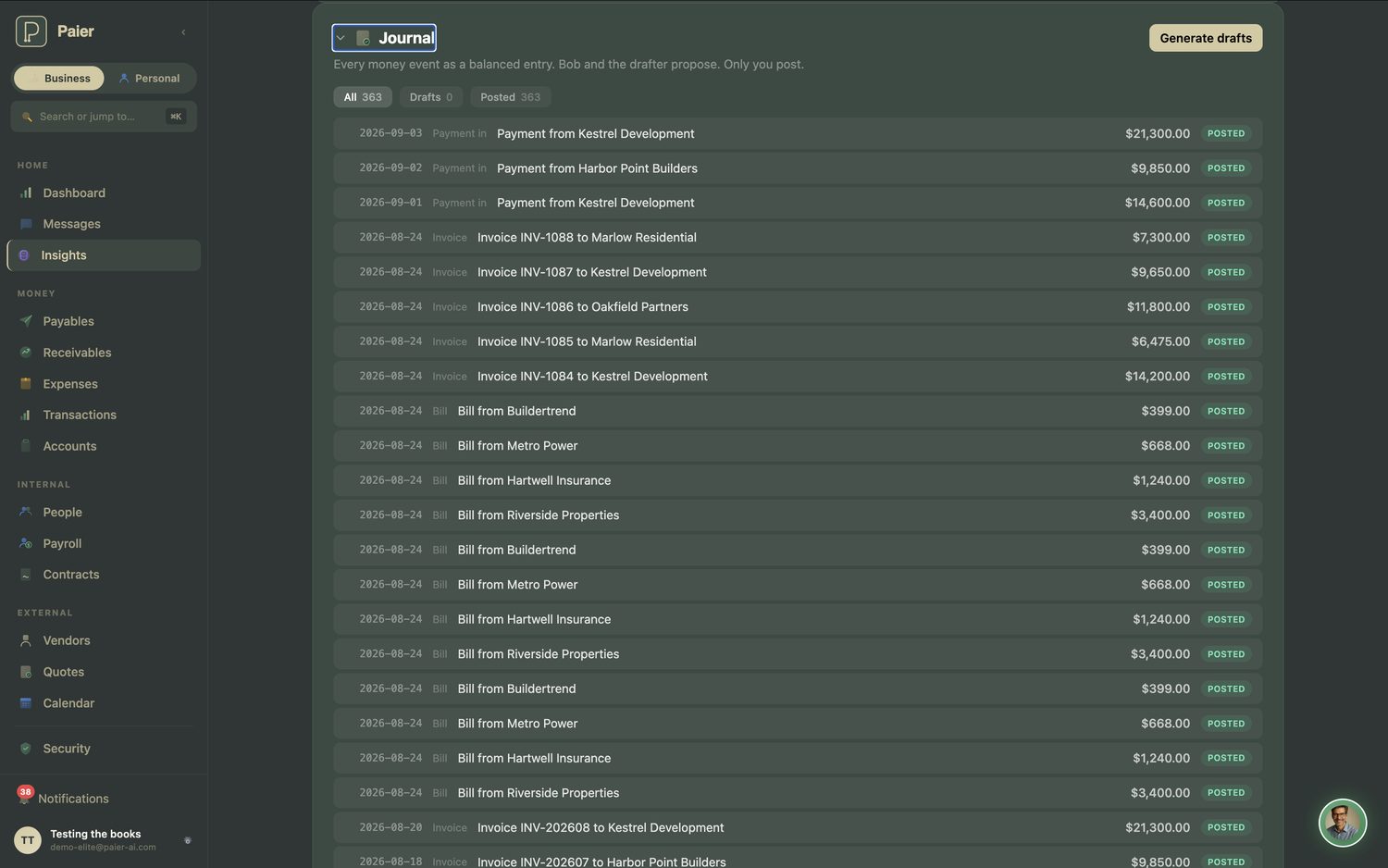
Every money event arrives as a balanced entry with its source attached. Bob and the drafter propose, your staff posts, and a posted entry can be voided but never edited. That is how an audit trail stays one.
Northside Contracting, a demo book. 363 posted entries, nothing sitting in drafts.
What is happening
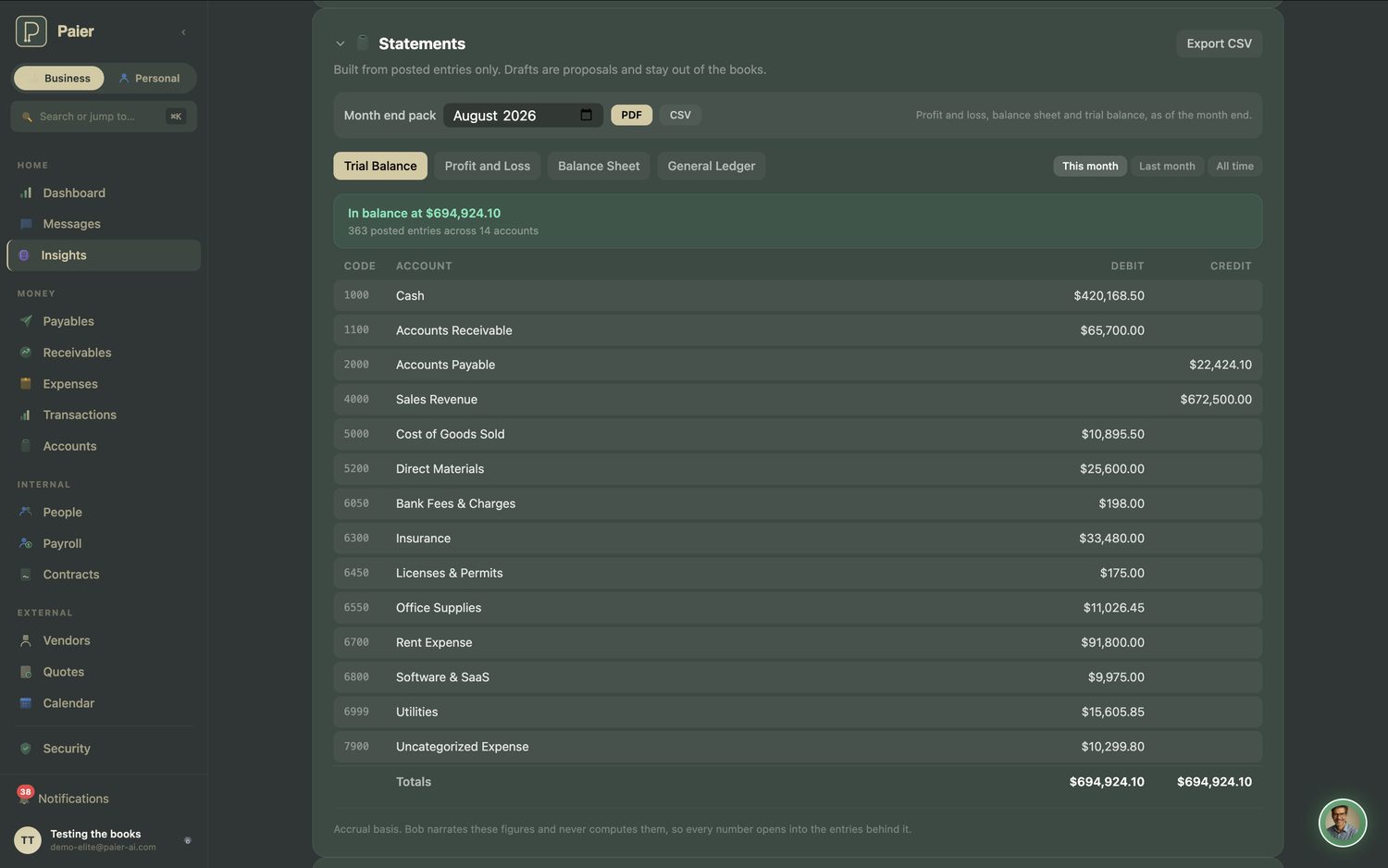
The trial balance is a position, not a movement, and it ties at the database rather than on the screen. Ask Bob any figure on it and he opens the entries behind it instead of recomputing.
In balance at $694,924.10. Debits equal credits, checked against the ledger.
What is coming
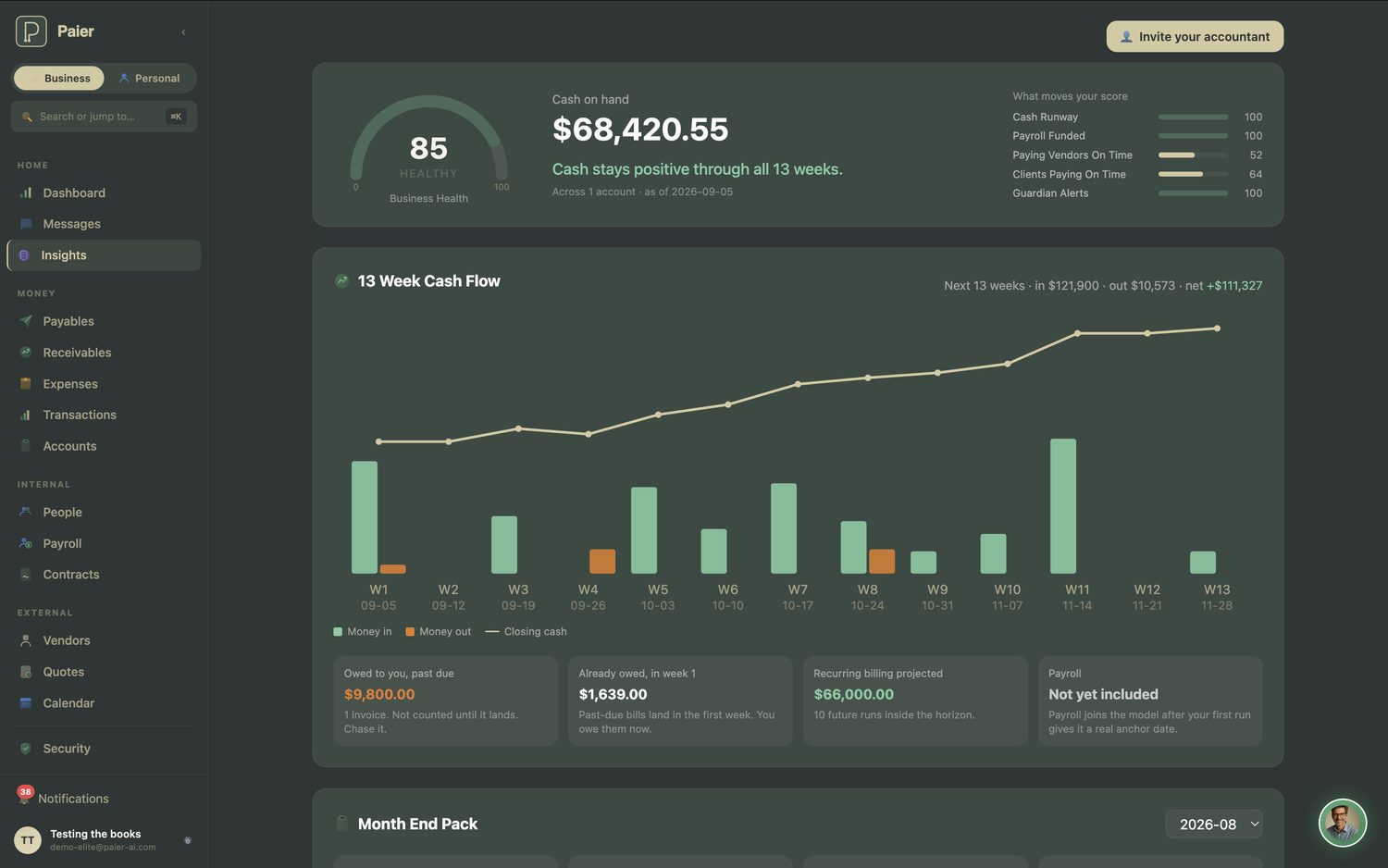
Thirteen weeks of cash off the same posted books, rebuilt as money moves. The forecast you show a client on Friday is still true on Monday because nothing about it was hand assembled.
Cash stays positive through all thirteen weeks, with what is owed and owing called out underneath.
All three of you are waiting on the same two things. Documents and people. That is why the client's employees and vendors are on the platform for free, and why Bob chases both without being asked.